Liszt's Kiss takes place in the 1800's, during the cholera outbreak in Paris. Dunlap did her research and the cholera outbreak in the book is accurate to what happened, and she also included two characters who did indeed exist in this time. Franz Liszt himself, a famous Hungarian pianist, and Marie d'Agoult, a countess. Each section of writing is switches between their point of views, Annes', the main protagonist, Anne's cousin, and a young doctor who wishes to marry Anne, whilst Anne has her heart set on Liszt.
As much as this sounds as your average romance novel with drama sprinkled on top, it isn't. Deception and mystery is at the core of this book. Relationships between the charterers don't come easy, and seemingly innocent characters jump to great lengths for those they love, including law breaking. The drama is kicked up a notch with classical misunderstandings, leaving everyone confused at the end.
The mystery is what really kept me around, the questions that shrouded Anne's family gave the book some much needed suspense. Lizt's Kiss has suspense, has intense drama, has mystery, and passion for music. However, all this is dampened because of the time period. It can be hard to feel the intensity of a scandal, when the scandal is something as small as holding hands. Accurate to the time period, but not that exciting. Some creators can put emotion behind otherwise bland historical fictions, this is not one of them.
Personally, Liszt's Kiss is not one of my favorites. The book wasn't able to drag out any emotional response from me. The character's were good, but not great and relatable. The writing was good, but not fantastic. It turned out to be a mediocre work with a lazy 'wrap-up' ending. I would only suggest this if your very into the 1800's or if you're lacking a next book to read.
Thursday, July 16, 2015
Monday, July 13, 2015
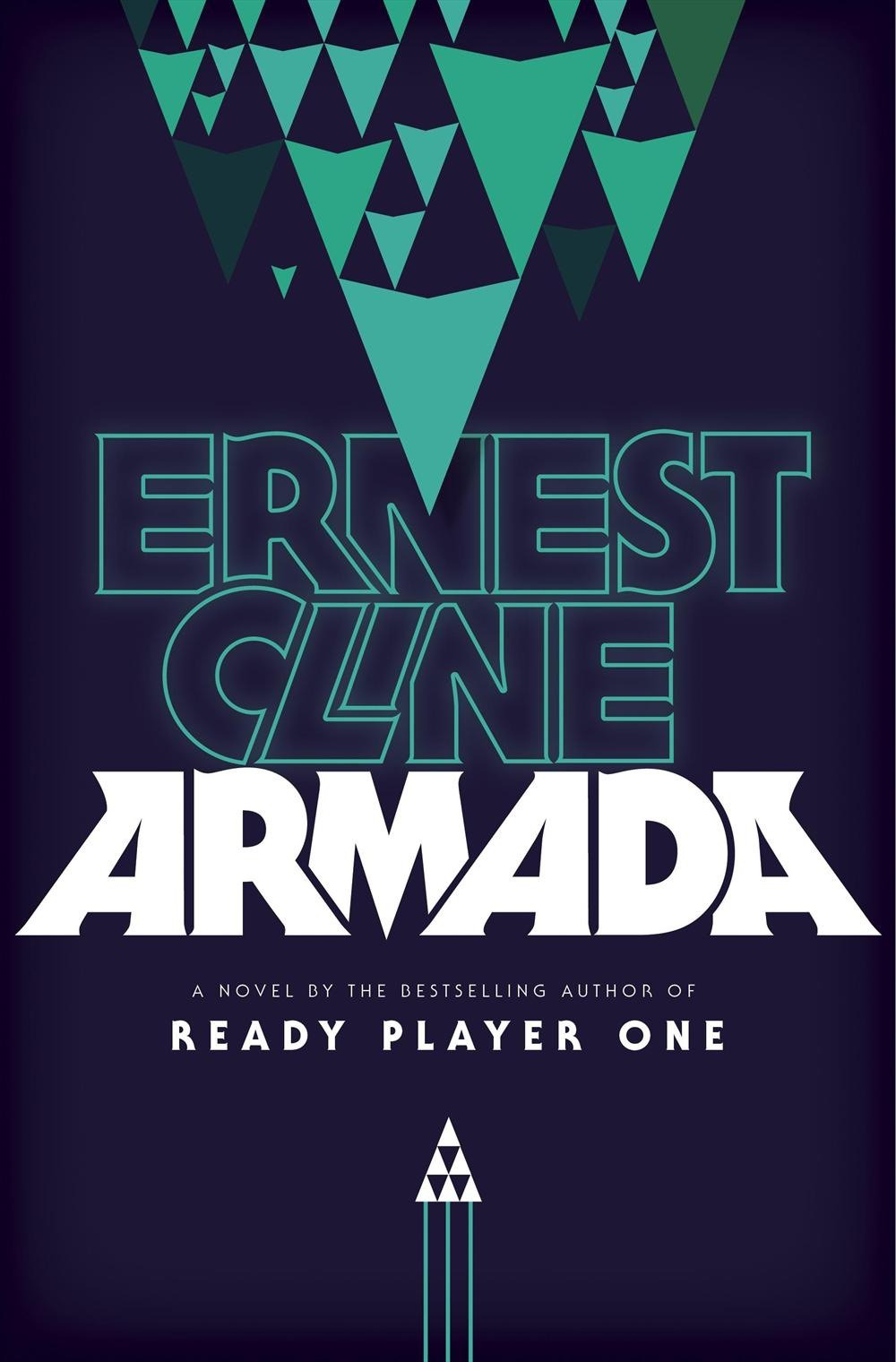
Armada by Ernest Cline
I loved Ernest Cline's first book Ready Player
One, and I wanted to love his new book Armada just as much. Unfortunately, I did not. (I apologize to Mr.
Cline for comparing his second book to his first, but it’s just the easiest way
to review the book.)
Ready
Player One was original and inventive. Armada is neither, and it is very predictable. It’s so predictable
that I thought it would surely end in another way, as the author points us so
strongly in the direction of the predicted ending. Plot points along the way
were also predictable, and Armada
falls back on tired clichés (like the school bully accompanied by his two “big
and dumb” thugs).
I totally bought into the world of Ready Player One. I can fully imagine
our world disintegrating into the chaos of Ready
Player One by 2044. I did not buy into the world of Armada, which is set in 2018. The whole scenario – sentient beings
on a moon within our own solar system, a secret plan to prepare all of Earth’s
citizens for war through popular culture and video games – did not seem
plausible. I felt like I was reading a script for a forgettable alien invasion
movie. I did not get caught up in Zack’s world.
Zack was also not nearly as likeable as Wade from Ready Player One, and Zack’s band of
compatriots felt clichéd (African-American, check; gay, check; middle-aged,
check; Asian, check).
I’m not a gamer, but that bothered me not a bit in Ready Player One. The gaming in Armada is much more focused on one type –
“space invader” shooting games. I was bored by the long descriptions of game
playing and actual combat.
The popular culture references in Armada feel forced. I didn’t get a lot
of the references in Ready Player One,
but they came so fast and furious, and were built so seamlessly into the dialog
and plot, that I didn’t care. Multiple times while reading Armada I found myself feeling annoyed that I didn’t get a
reference.
Although I couldn’t help but read Armada in the shadow of Ready Player One, if I’d never read Ready Player One I would not have
enjoyed Armada any more. In fact, I
probably gave Armada an extra half
star because I love Cline and his first novel so much.
Armada is not without merit. I was amused off and
on. I enjoyed Zack’s online call sign of IronBeagle, a combination of the hero
from the movie Iron Eagle and Snoopy fighting the Red Baron. Cline has a nice
way of putting words together (“I reminded myself that I was a man of science,
even if I did usually get a C in it.”) Armada
was a quick read, and there are worse ways to pass some time. I will
definitely read his next book.
If you have not read Ready Player One,go read it! And if you have, I'm sure you will want to read Armada as well. It comes out on July 14 and will be available at the Galesburg Public Library.
Saturday, July 11, 2015
Beautiful Souls by Eyal Press
Beautiful Souls is a descriptive non-fiction that takes on a new perspective in history, focusing on four people who went against the norm when the norm was morally wrong. Instead of largely known hero's, Eyal writes about normal people who step out of line for what they believe is right. This book is set up in four different parts, each about a different person faced with a situation that will change their lives. Eyal does an expert job of writing down their experiences, what as a person they are like, and how the interviews went.
The author digs deep to find answers to seemingly spontaneous acts of courage from otherwise indifferent people. He has an excellent talent for finding others personality traits and describing their character. He manages to connect psychological theories to why these four acted so out of character when faced with a moral decision that held no consequence over their head if they went against what they believed was right.
I would recommend this to anyone who is a fan of psychology and history, and maybe even philosophers. Eyal Press delivers this book well, one of the compliments I feel that I can give him is he does not fall to what so many non-fiction writes tend to do and does not use unnecessary 'big' words. The words and sentences fall together smartly without any assistance from words that no one has heard of before. While I read this, it was evident he was a professional journalist and worked hard to gather as much information as possible on this topic.
The author digs deep to find answers to seemingly spontaneous acts of courage from otherwise indifferent people. He has an excellent talent for finding others personality traits and describing their character. He manages to connect psychological theories to why these four acted so out of character when faced with a moral decision that held no consequence over their head if they went against what they believed was right.
I would recommend this to anyone who is a fan of psychology and history, and maybe even philosophers. Eyal Press delivers this book well, one of the compliments I feel that I can give him is he does not fall to what so many non-fiction writes tend to do and does not use unnecessary 'big' words. The words and sentences fall together smartly without any assistance from words that no one has heard of before. While I read this, it was evident he was a professional journalist and worked hard to gather as much information as possible on this topic.
Tuesday, July 7, 2015
Dishing the Dirt by M.C. Beaton (Agatha Raisin #26)
M.C. Beaton has been publishing books about Agatha Raisin since 1992. I am a loyal Agatha Raisin fan and have read all 26 books in this cozy mystery series. There hasn’t been much new in recent titles, but a new entry is still a fun read. I enjoyed Dishing the Dirt more than the last three books. It seemed a little more light-hearted.
Having said that, the thing that intrigued me the most as I read Dishing the Dirt was the body count. Three dead bodies by page 34. Four dead bodies by page 57. Five dead bodies by page 70. Six dead bodies by page 96. Seven dead bodies by page 124. This is not a plot that takes itself too seriously! And weaving in and out amid the carnage is Agatha and her normal crew – James, Charles, Bill, Toni, Phil, Mrs. Bloxby. Mrs. Bloxby even gets a fun plot development of her own! (About time.)
This is a great read for a plane ride, an afternoon at the beach, or other circumstances where total concentration is not necessary or possible. It’s verra silly, as Beaton’s other series character, Hamish Macbeth, might say. And as has happened before, there is practically a whole other book in the Epilogue, with a teaser for the next book in the series.
Dishing the Dirt is a definite recommend for die-hard Agatha fans. Settle in for a visit with our aggravating but lovable old friend in the charming Cotswolds village of Carsely.
The Galesburg Public Library has various books from the Agatha Raisin series available in the adult Fiction, Large Print, and audiobook sections and as digital ebook and audio downloads. The first book in the series is Agatha Raisin and the Quiche of Death. Dishing the Dirt is scheduled to come out on September 15. I read a digital ebook from netgalley.com.
Monday, July 6, 2015
The Just City by Jo Walton
The Just City is a unique
dystopia, or utopia, which is focused on Greek gods, mythology, and
Plato's work The Republic, though you can read this book
without having to read The Republic. This is a book intended
for mature audiences, it hits on heavy issues, and there is rape
scenes in it, though nothing I believe to be extremely graphic.
The base of the book is about the
Greek god Athene. She brings various people throughout all of time,
historical figures, everyday people, and even robots' to Atlantis in
order to build Plato's Just City. This book is an interesting mix,
bringing successful people from all over the time spectrum to one
place to discuss philosophy and create the Just City Plato had
dreamed of.
Plato's Just City brings up many
philosophy questions, and social issues that come from many different
centuries into question. The book itself focuses more so on the
development of the city through the eyes of three characters, Maia,
one of those chosen to build the city, Simmea, a child of the city,
and Apollo, the god who becomes mortal in order to participate as a
child in the Just City. As the city grows, some of the issues touched
upon are human breeding instead of marriage and love, if humans can
have relationships without crossing the line of sex and without
loving someone more then the other citizens, and discussions on
trust, souls, and free will. There are many more subjects presented,
those are simply some of the examples that I enjoyed exploring
myself. The biggest question is should justice go over happiness, and
I suggest that question to be at the forefront of your mind when you
read this.
Jo Walton is an incredible writer, she
has a grand understanding of Greek mythology and Plato's literature.
Walton was able to show the true nature of Greek gods extremely well,
and did just as good of a job on the human characters and their
relationships. I could find no fault in the writing of The Just
City, I highly recommend this,
specifically if you are interested in dystopias or utopias, Greek
mythology, and Plato's works.
This work was published in 2014, but the ending did leave room for a second installment, which I look forward to if she decides to continue on with it.
Murder in Thrall by Anne Cleeland
Murder in Thrall
is not your normal British police procedural. The Detective Chief Inspector,
Michael Acton, is a stalker. He admits as much to the object of his obsession,
Detective Constable Kathleen Doyle, who is elevated from the lower ranks to
work with him because of his interest in her. “Misdemeanor or felony?” she asks
him. He thinks about it for a moment and replies “felony.” He has entered her
apartment. He watches her through binoculars. He takes photos of her sleeping
unaware and keeps them on his phone.
I was totally sucked into this odd mystery and didn’t want
to stop reading. Each chapter opens with a brief insight into what’s going on
in Acton ’s
mind. The rest of the narrative is from Doyle’s viewpoint. She has the ability
to tell when most people are lying, which makes her very useful during
interrogations. She has trouble reading Acton, but when he suggests before they
have even had a date that they should solve their individual problems of
finding suitable companions by marrying each other, she is shocked - but can
tell that he truly means it.
I wondered early on if this was actually a psychological
thriller, but as there are already two more books in the series, you can draw
your own conclusions. I enjoyed the mystery part of this mystery, and it took
some twists I did not expect. Some of the minor characters are fairly well
developed. I read a lot of books by British authors and was impressed to come
across a number of words and phrases that I did not know (although most of them,
like “culchie,” were from the Irish
Doyle). The reference “brides-in-the-bath,” for example, is to an English
serial killer case I’d never heard of that is an early example of the use of
forensics in solving a crime.
On top of everything else, Acton has a title, so there were references
to the British aristocracy on top of the usual SOCOs, DCIs, Evidence Recovery
Units, and other terms I expect to find littered throughout police procedurals.
Acton and Doyle’s relationship is further complicated beyond the fact that he is her boss because he is an erudite Anglican
English Lord and she is an Irish Catholic nobody. Doyle is uneducated and
inexperienced but intelligent and sensible. I enjoyed their banter and her way
of handling tense situations.
Doyle’s manner of thinking and speaking is charming. She
often refers to herself as her “fair self,” her “foolish self,”, her “motherless
self,” etc., which I would have thought would have become annoying but did not.
She has a healthy self-esteem and feels confident about her ability to deal
with Acton ’s obsession.
She is trying to improve herself and often works in vocabulary words, another
habit that could have become annoying but did not. Acton is a highly unprincipled DCI. There is
a lot of material for future books in the series. I often smiled at Cleeland’s way with words, including
sentences like “Men; honestly.” (p. 90 of the digital edition)
There was a plot point that took place early on but was
revealed much later that felt like a cheap trick on the author’s part, and late in
the book Doyle insists that Acton
have sex with her after something had happened in an exchange that did not feel
at all believable to me. But my complaints about the book are small and
nit-picky.
The relationship between Acton and Doyle is clearly
unhealthy, and I feel a bit conflicted about this book, but I was intrigued all
the way through and will definitely read the next book in the series. If you
like British police procedurals that feature a romance or morally ambiguous
detectives, I recommend Murder in Thrall.
The Galesburg Public Library has the three books in Cleeland’s
New Scotland Yard mystery series in both print and digital through eRead Illinois .
Wednesday, July 1, 2015
The Natural World of Winnie-the-Pooh by Kathryn Aalto
If you remember Winnie-the -Pooh from your childhood, or the childhood of someone dear to you, with fondness, then The Natural World of Winnie-the -Pooh by Kathryn Aalto is good for a relaxing, nerve-calming read. In the book she relates the career of A. A. Milne, author of two Winnie-the-Pooh books as well as many other books and plays. Aalto also tells of the collaboration of Milne and artist E. H. Shepard whose iconic illustrations created visual memories to accompany the classic stories.
Aalto goes on to talk about the origins of the stories, many based on elements from the childhood of Milne's son Christsopher Robin, namesake of the boy in the Pooh books. The real Christopher Robin's rambles in Ashdown Forest near the Milnes' home inspired the Hundred Acre Wood of the books. Aalto takes the reader from location to location in Ashdown Forest, telling of its history and geography as well as likely connections to the settings of the dwellings and adventures of Pooh, Piglet, Owl, Rabbit, Eeyore, Kanga, Roo and Tigger. The last portion of the book deals with the flora and fauna of the forest.
The Winnie-the -Pooh books continue to remain top best-sellers. The Natural World of Winnie-the-Pooh is a lovely companion. It has many photographs as well as illustrations. In the pre-publication advance reader copy the photographs are all in black and white. When published in September 2015, most of the photographs will be in color. Aalto, overall, does a good job. My only criticism is that she is a little repetitious. I think there is too much material related to the game of Poohsticks, a simple game from one of the Pooh stories.
There is a popular idea that similar things often happen in threes. My reading of this book was a part of such a grouping. Just before picking out this title from the advance reader book cart at my local library, I was reading cartoonist Bill Watterson's Exploring Calvin and Hobbes - An Exhibition Catalog. In it he describes a wooded area behind his childhood home in Ohio. While he denies being any Christopher Robin, he does fondly speak of his own woodland rambles and the freedom they made him feel. Certainly the Calvin and Hobbes cartoons often had their own woods and adventures in them, with Calvin a more zany, roguish six-year-old than Christopher Robin and Hobbes perhaps more philosophical than Tigger.
At the same time I was reading Watterson's book, I was dealing with some writings of my own. They involved an old newspaper clipping about a three-acre woods in Virginia. Curiosity about the status of the woods twenty-four years after the article was written led me, via the Internet, to come in contact with a gentleman who is a master gardener and certified Virginia naturalist. He has been using the 3-acre woods as a resource to educate over 13,000 local school children about the marvels of nature, its plants and critters. With the appearance of Aalto's book on the library's cart, I had an unplanned set of three - three woods, three connections with childhood woodland experiences. What a delight - tiddely-pom.
Aalto goes on to talk about the origins of the stories, many based on elements from the childhood of Milne's son Christsopher Robin, namesake of the boy in the Pooh books. The real Christopher Robin's rambles in Ashdown Forest near the Milnes' home inspired the Hundred Acre Wood of the books. Aalto takes the reader from location to location in Ashdown Forest, telling of its history and geography as well as likely connections to the settings of the dwellings and adventures of Pooh, Piglet, Owl, Rabbit, Eeyore, Kanga, Roo and Tigger. The last portion of the book deals with the flora and fauna of the forest.
The Winnie-the -Pooh books continue to remain top best-sellers. The Natural World of Winnie-the-Pooh is a lovely companion. It has many photographs as well as illustrations. In the pre-publication advance reader copy the photographs are all in black and white. When published in September 2015, most of the photographs will be in color. Aalto, overall, does a good job. My only criticism is that she is a little repetitious. I think there is too much material related to the game of Poohsticks, a simple game from one of the Pooh stories.
There is a popular idea that similar things often happen in threes. My reading of this book was a part of such a grouping. Just before picking out this title from the advance reader book cart at my local library, I was reading cartoonist Bill Watterson's Exploring Calvin and Hobbes - An Exhibition Catalog. In it he describes a wooded area behind his childhood home in Ohio. While he denies being any Christopher Robin, he does fondly speak of his own woodland rambles and the freedom they made him feel. Certainly the Calvin and Hobbes cartoons often had their own woods and adventures in them, with Calvin a more zany, roguish six-year-old than Christopher Robin and Hobbes perhaps more philosophical than Tigger.
At the same time I was reading Watterson's book, I was dealing with some writings of my own. They involved an old newspaper clipping about a three-acre woods in Virginia. Curiosity about the status of the woods twenty-four years after the article was written led me, via the Internet, to come in contact with a gentleman who is a master gardener and certified Virginia naturalist. He has been using the 3-acre woods as a resource to educate over 13,000 local school children about the marvels of nature, its plants and critters. With the appearance of Aalto's book on the library's cart, I had an unplanned set of three - three woods, three connections with childhood woodland experiences. What a delight - tiddely-pom.
Subscribe to:
Posts (Atom)